should start from the beginning.
We should teach our children values from an early age and show them how money is earned. It’s up to us to teach them what money is for, how to manage it, and how to save it. The essence of it all is learning to set aside a portion of our income for a rainy day. As a rule, this should be 10–20% of our income, depending on our means, of course. By taking this step, we can avoid taking out a loan, which is disadvantageous and unnecessary. Whatever we happen to need can be purchased with the money we’ve saved—money we started setting aside from the moment we started working, or even before that. Many children receive a substantial allowance from their parents and grandparents.
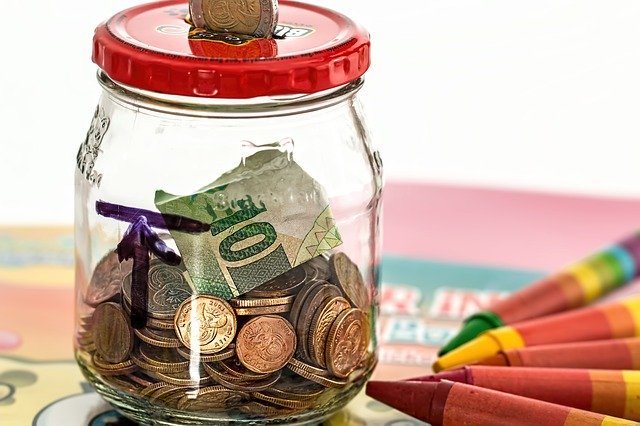
Show them that if they save half of it, in a year they can buy, say, a bike or a nice remote-controlled car. It’s important to learn to save from the very beginning, because you don’t miss what you don’t have.
Example 1.
Mr. Tomáš started working right after school. From the start, he decided to contribute the full amount to his building savings account to qualify for the maximum government subsidy of 2,000 CZK. So he saved 1,700 CZK. After six years, he decided to buy a nearly new car that cost 105,000 CZK. He didn’t have to take out a lease or a loan because, after 6 years, he had saved nearly 150,000 CZK.
To some, this may seem like a long time, but believe me, it will fly by. Then you’ll be glad you started right away.
If you want a house, the principle remains the same. Following the tightening of mortgage conditions on the market, each of us must have at least 10% of our own funds to purchase real estate, or another form of collateral. I’m talking, for example, about your parents’ apartment, a cottage, or your brother’s house. Here, however, a question arises: and let’s be honest, will your family allow you to use that property as collateral? The risk is high; it depends on the trust between individuals. The rules also stipulate that you can afford to pay back a maximum of 45% of your average net income, and you can borrow up to nine times your annual net salary.
Example 2.
Mr. Tomáš earns 30,000, which is 360,000 per year. Multiply that by 9, and we find that he can borrow up to 3,240,000 CZK and can repay a maximum of 45% per month, which is 13,500 CZK. Of course, it also depends on age and the repayment term.
Reality is harsh, but manageable, so save with love and hope for a better tomorrow.
